Case Study: Argentina
When it comes to macroeconomic policy, Argentina is probably the most fascinating case study in the world. Not only because of the history (The Economist has referred to it as the only modern economy that has gone from being high income to middle-income) but also the clear links between policy decisions and outcomes.
Prior to 1946 Argentina broadly kept pace with prosperous Switzerland. But its economic performance has been much worse since then.
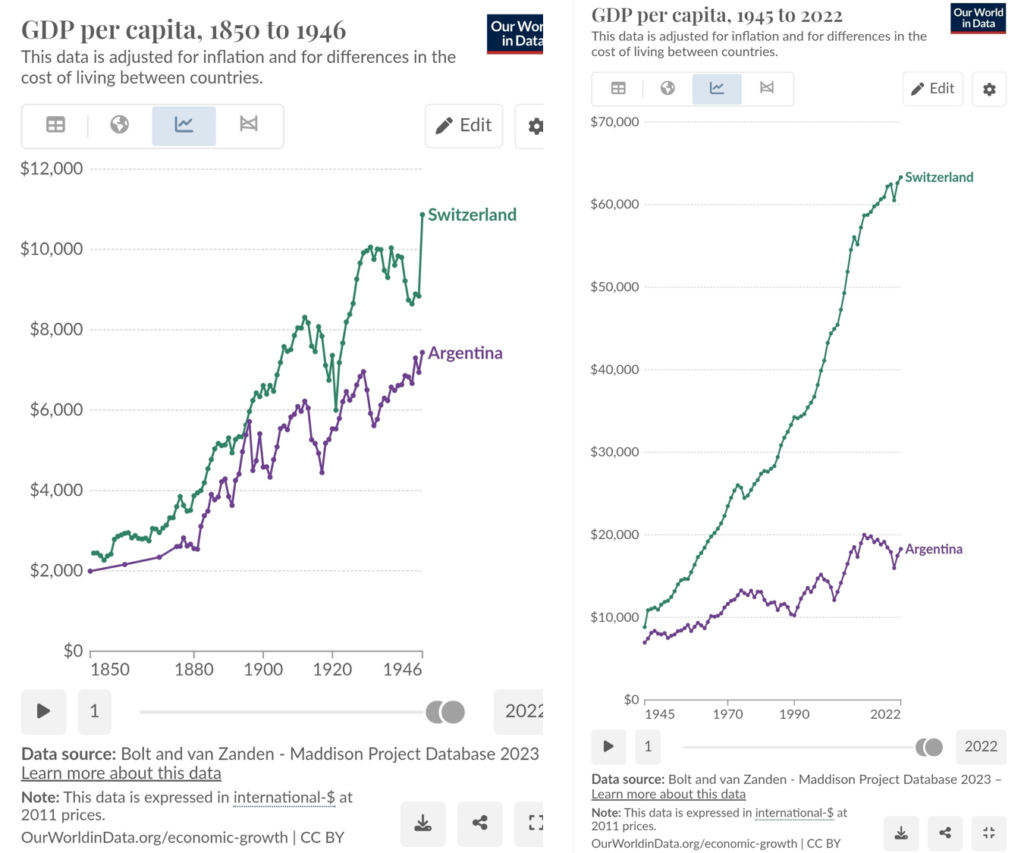
According to Eduardo Levy Yeyati Argentina has had “many successful stabilisation plans”, but that doesn’t lead to long term growth. The recent history, is particularly interesting.
From 2007-2015 President Cristina Kirchner continued the “Peronist” platform of her husband, Nestor. Peronism can be understood as an ideology that combines political sovereignty and independence with a pursuit of social justice. It can be considered nationalist in the sense that it emphasises Argentinian status, but inclusive and progressive in its socio-economic commitments. In terms of the goals, they might sound noble and desirable. Indeed, high spending on welfare meant that poverty rates fell sharply. But the budget deficit increased sharply:
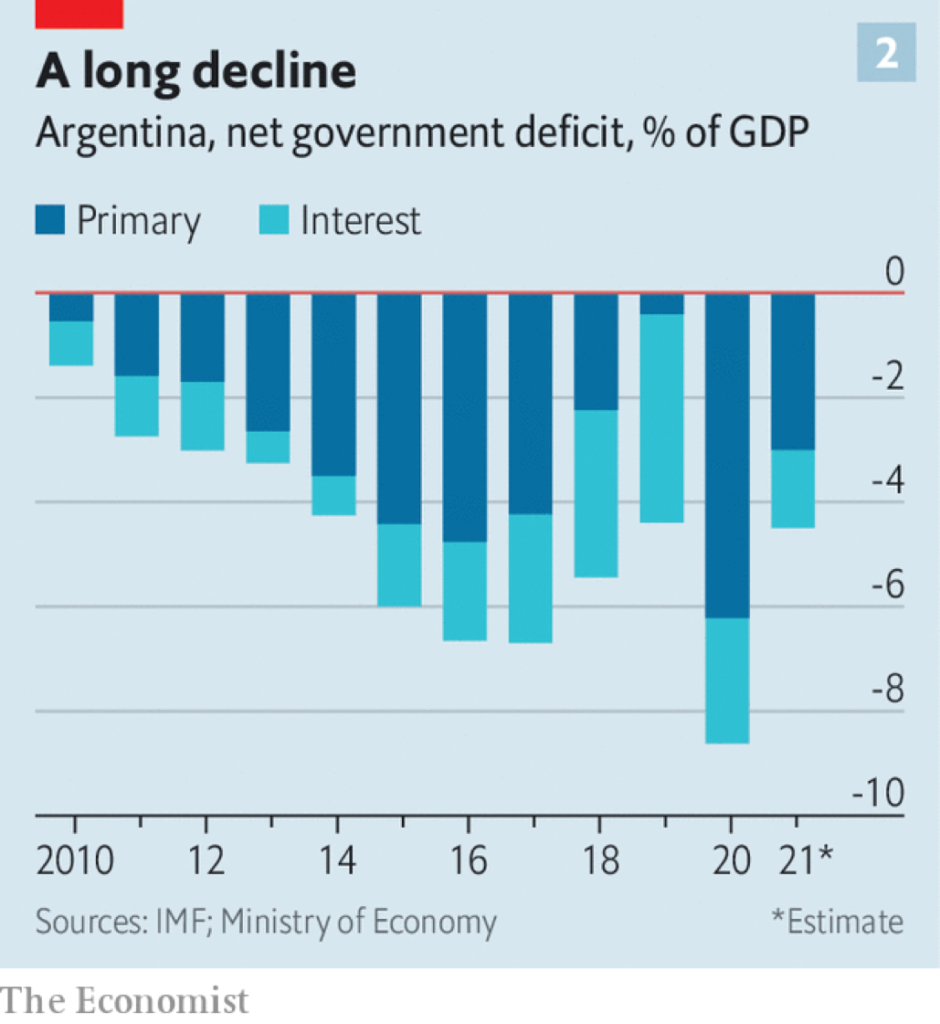
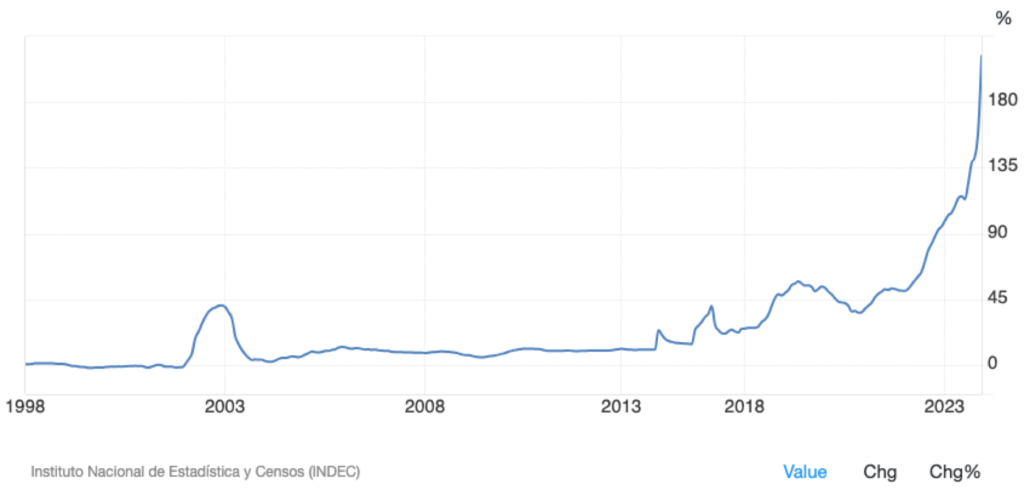
From 2003 to 2023 the size of the public sector nearly doubled and the state got bigger and bigger. A classic example of the old adage of fiscal ill-discipline that prompts politicians to resort to the printing press. Indeed, here’s what has happened to inflation in Argentina since 1998:
In a retrospective published by The Economist, we can see what’s happened to the two key macro indicators of inflation and the budget deficit:
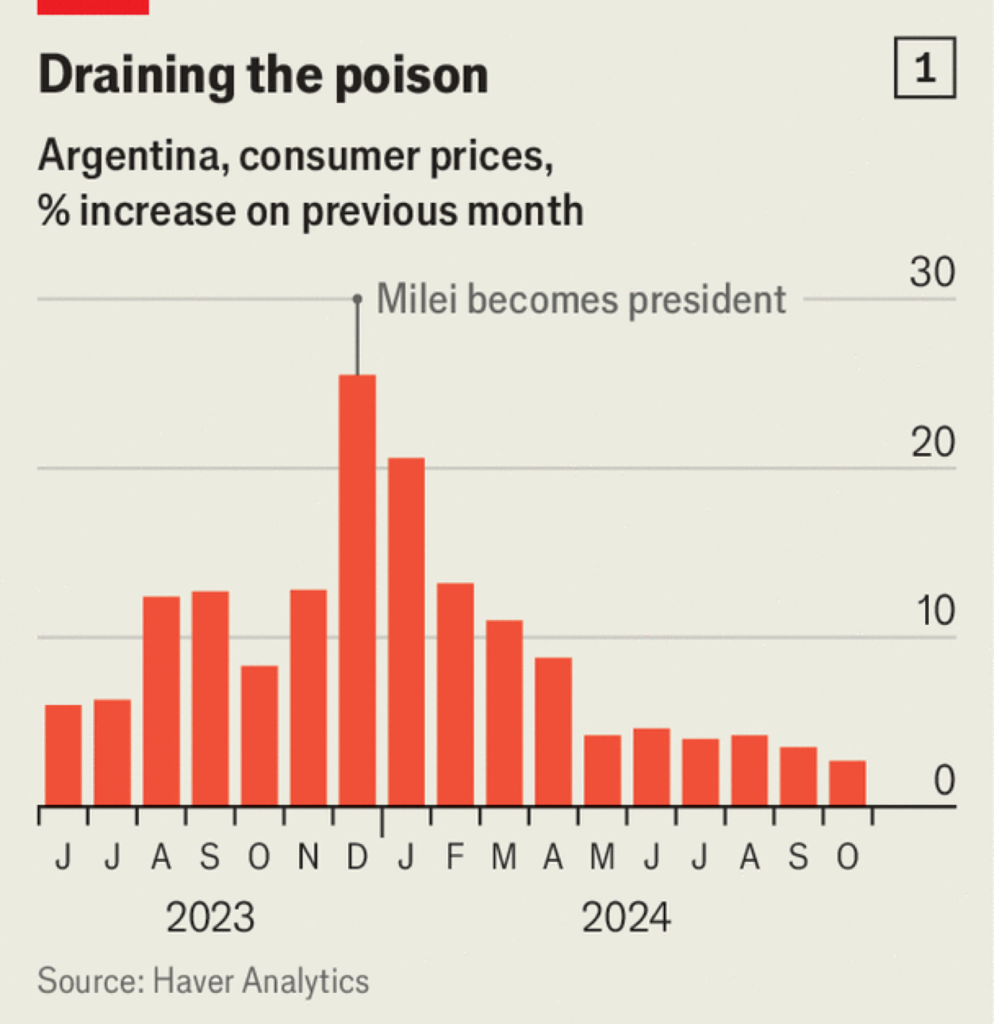
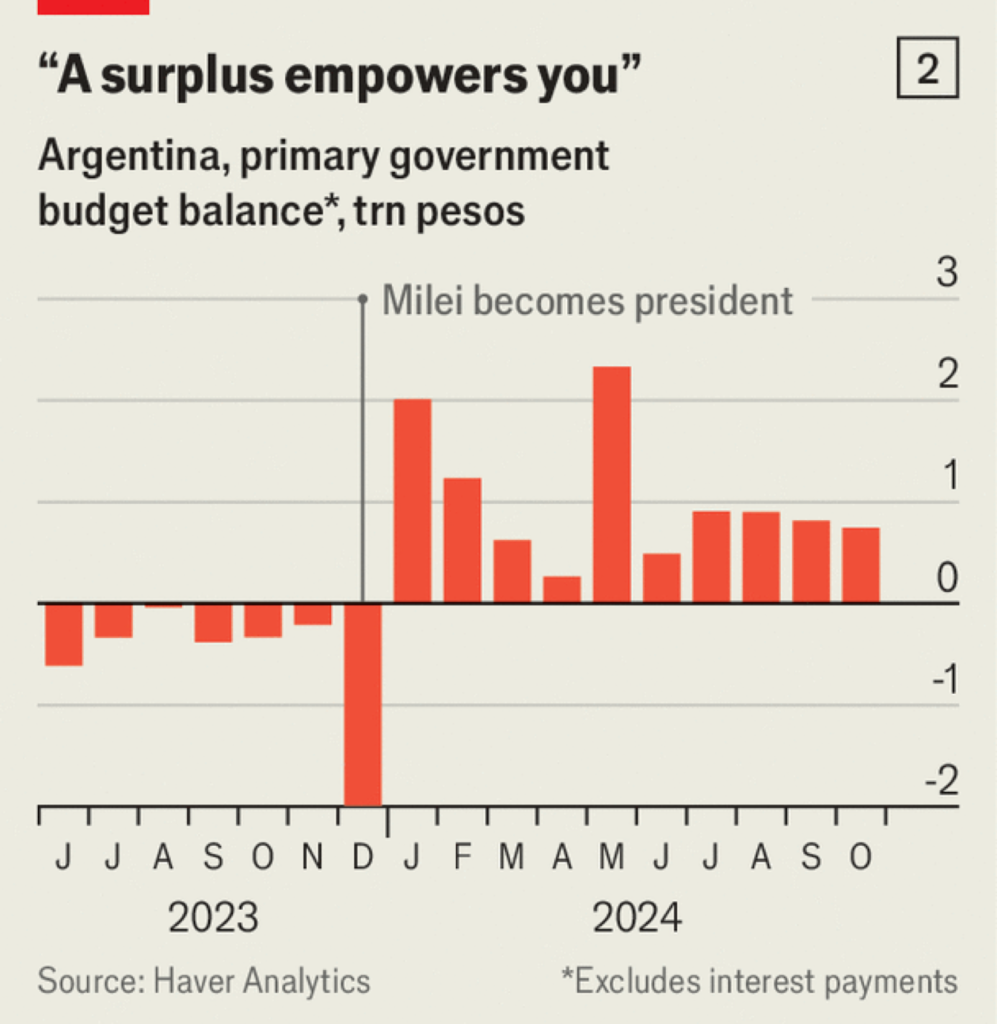
This is really quite remarkable: inflation was almost immediately brought under control, and fiscal discipline was obtained.
This comes at a cost:
- The economy was in recession (although it came out of it in Q3 2024)
- Unemployment rose (but not by much, and started to fall within a year)
- Poverty rates increased (from 40% to 53%)
There are obviously lots of factors that affect a countries performance, but Milei’s first year in office showed that it is possible to stabilise the two key elements of aggregate demand management: monetary and fiscal policy.
How successful was Milei’s first year in office?
“Assessing Milei’s impact”, Kaleidic Economics, January 2025
https://www.kaleidic.org/news/2025/1/8/assessing-mileis-impact